Ancestral Figure "Patong"
INV. #4144
Ot Danum or Ngaju Dayak. Central Kalimantan, Borneo Island, Indonesia.
Hardwood. H: 48.25" (122.6 cm). Mounted on new stand (not shown in photos) that adds 6" (15.2 cm) to height of sculpture.
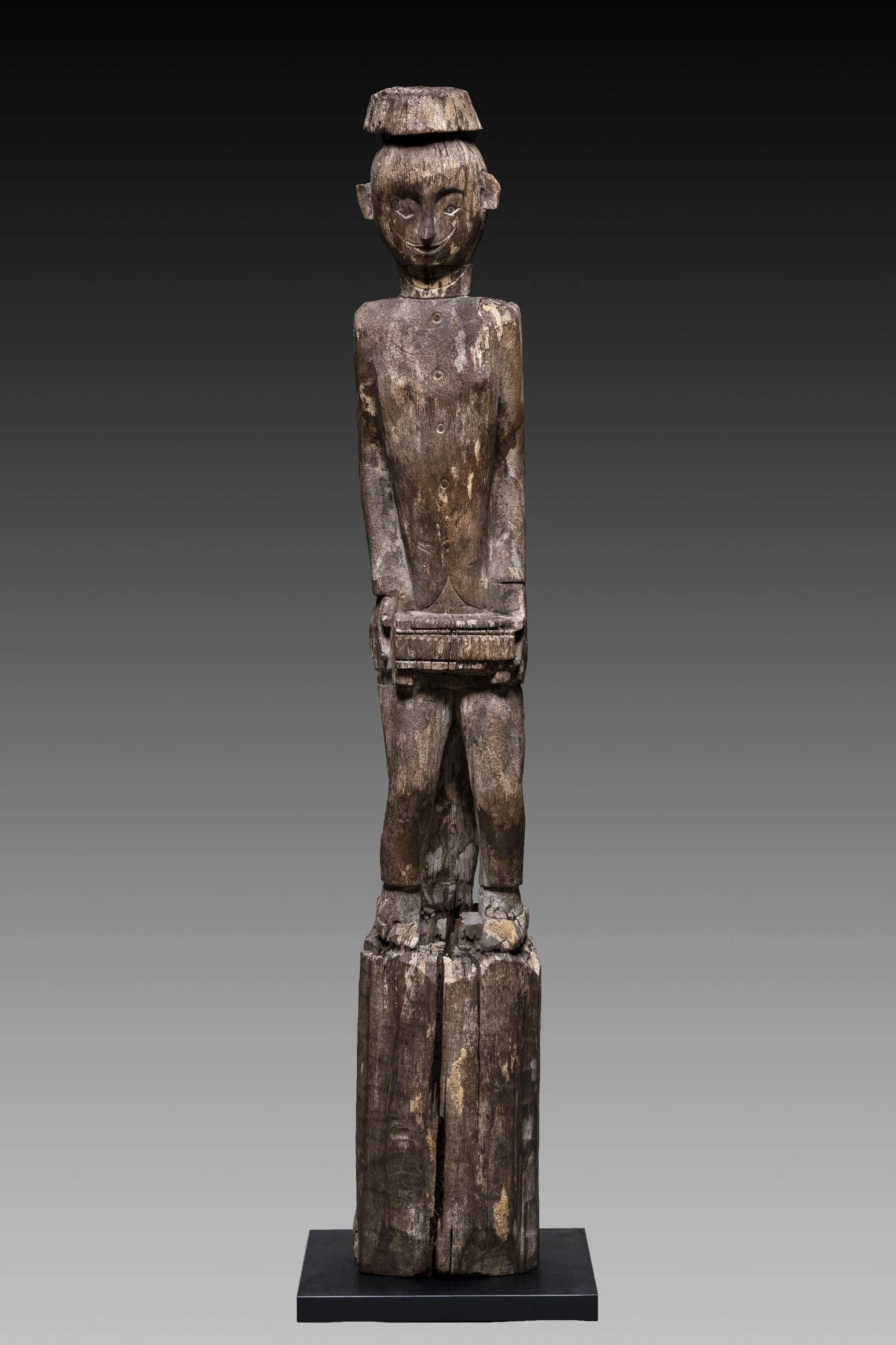
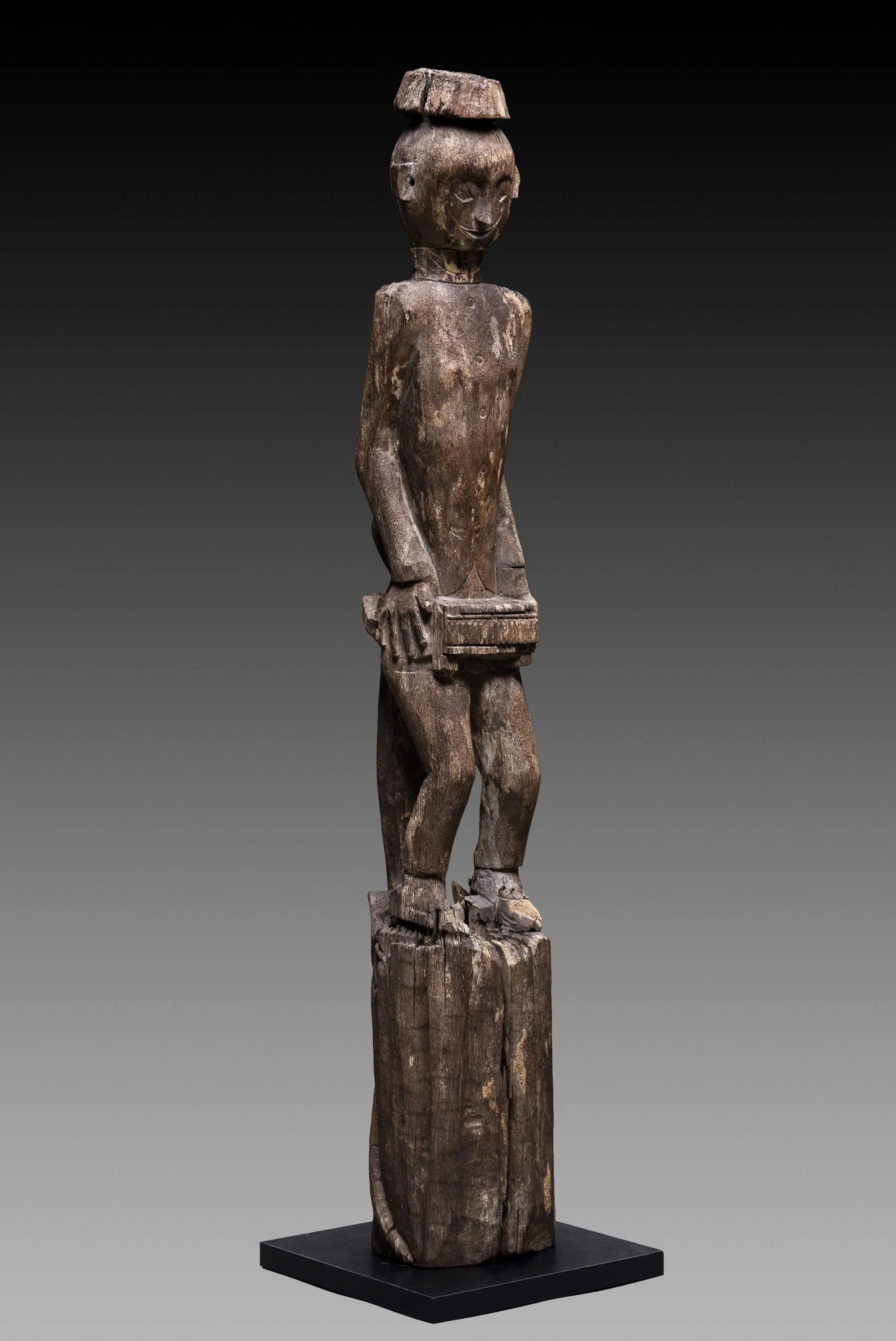
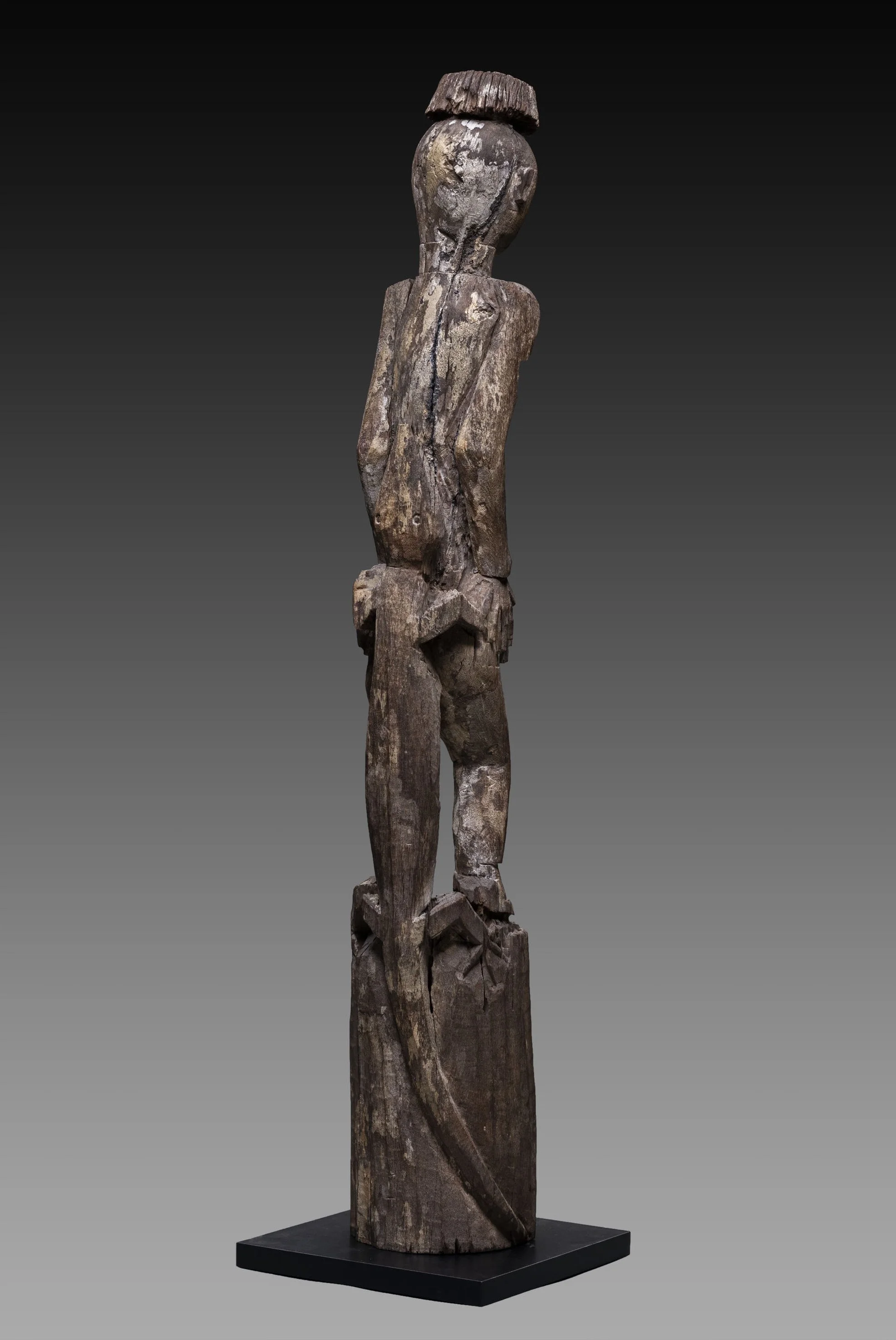
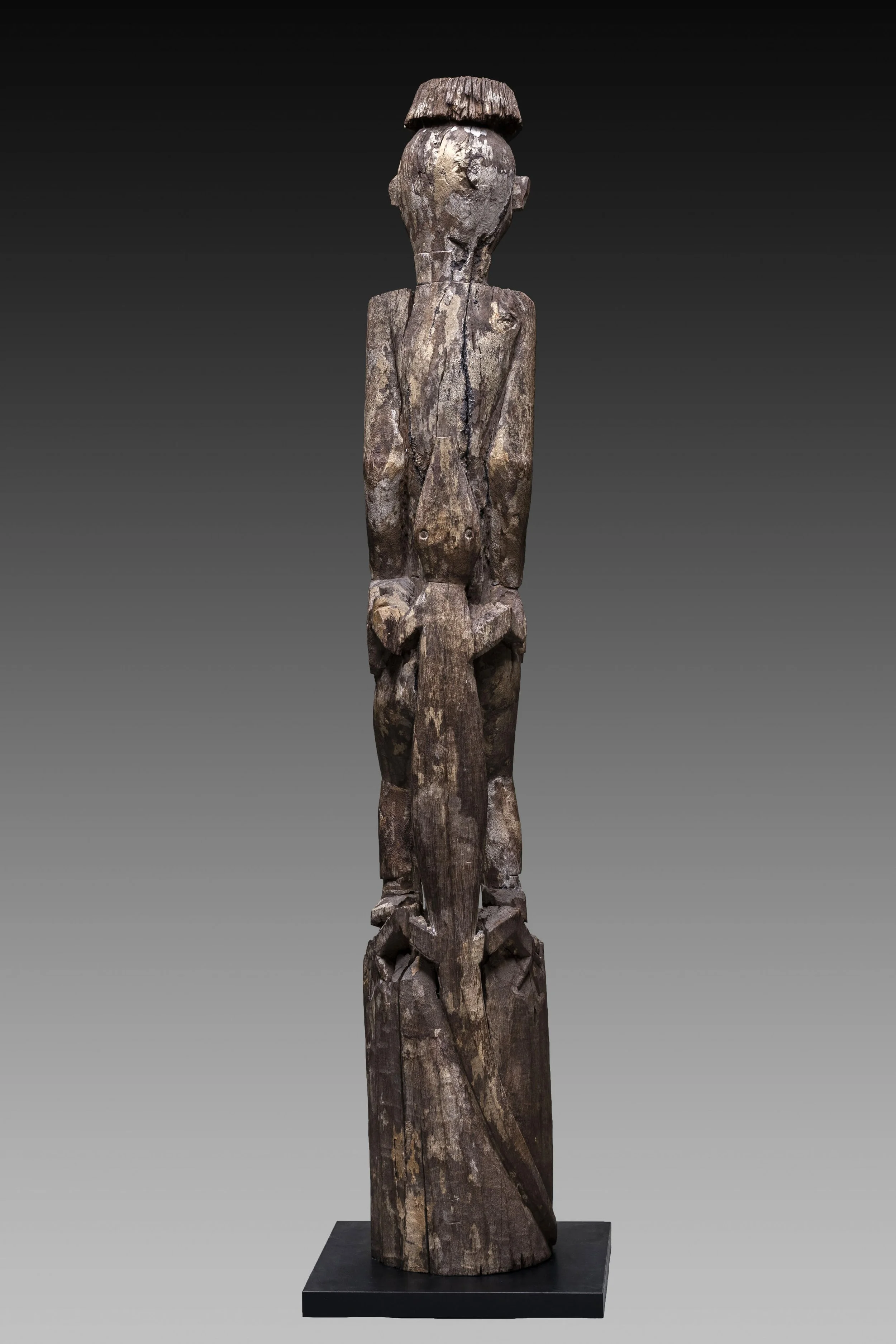
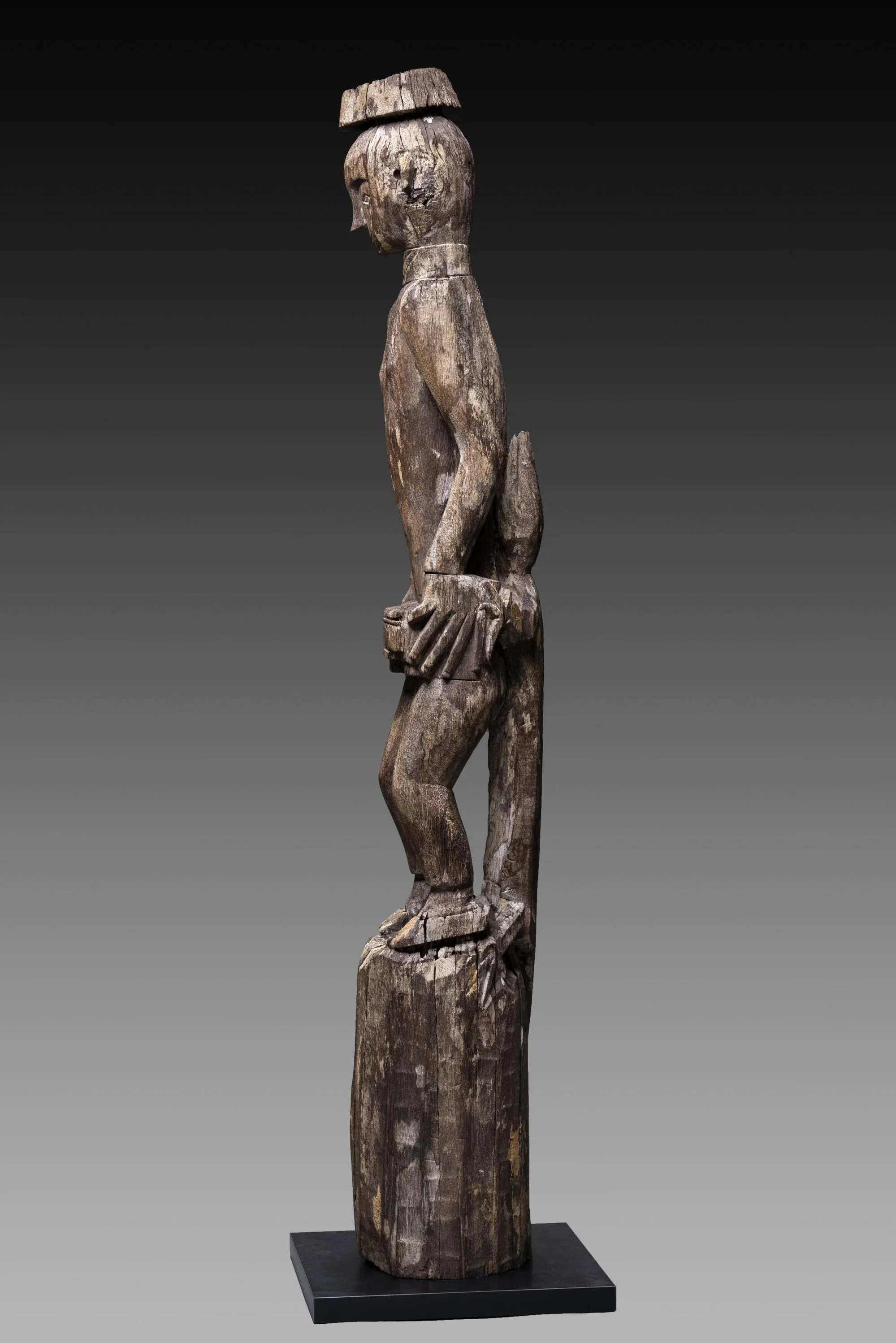
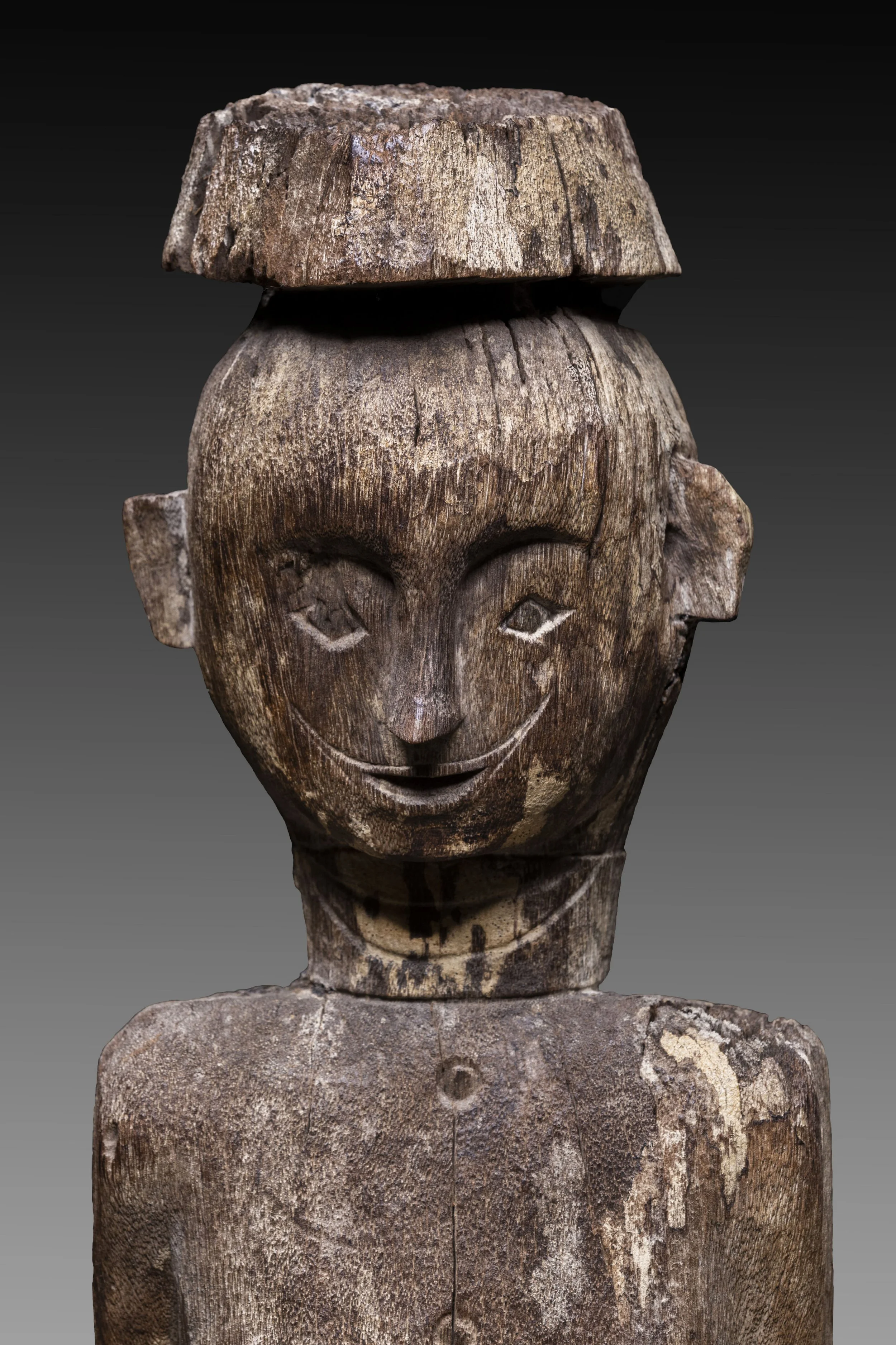
Standing male figure, wearing a Dutch military uniform (jacket and pants), holding a treasure box or betel nut container, with a lizard or crocodile carved on the back side. Including animal figures on sculptures are meant to increase the power and status of the sculpture. I love the bent leg stance and the shape of the hands holding the box.
A note about the uniform. I find that some sellers and buyers dismiss Dayak figures with these features (which have also included chairs, watches, rifles, boots, etc), as decadent or overly influenced by the European colonial authority. They are missing the point of these features within the Dayak view of their world. First, Dayaks are extremely adaptive people who often take on outside ideas and objects that improve their life, and as a way of increasing their status and wealth. Anyone can find or make things from materials found in the forest, but only those with trade connections and wealth are able to acquire rare items from outside the village. These included glass seed beads (most originated in Bohemia in the 19th century and used by virtually all Dayak groups for decoration, including baby carrier panels, jackets, skirts, etc), ceramic jars from mainland Asia and brasswares from the coastal Malays (both items were valued as currency), rifles and shotguns of course, a well as a host of other objects. Second, Dayaks often try to appropriate the symbols of anyone or thing they consider as a powerful force, including spirits and rival Dayak groups. This was also true during the colonial period, when European administrators, soldiers and missionaries suddenly appeared in their world and took control. What were the symbols of that authority, uniforms and modern weapons. By taking on those symbols and including them on a statue of this type, they are proclaiming this individual had that samepower and status as the colonists. It can also show that this individual may have had a direct connection to the power structure of the colonial authority. This also relates to headhunting. When you take an enemy's head, you take that spiritual force for your own. And again, increase your own status. Taking the image of that uniform can be viewed as equivalent to taking their head.
Provenance: Ex Berlin, German collector, who acquired this statue from the widow of August Flick of Cologne, Germany, a collector of Indonesian art. Flick collected this piece from the Barito River area in the late 1970s. After his death some of his pieces ended up in the collection of the Ethnological Museum, Dresden and the Rautenstrauch-Joest Museum, Cologne.
Prices are not listed on this website. For Gallery price lists or individual prices, please send your request, with inventory number and title description, to: majtribal@gmail.com.